

At War with Causality
So it goes

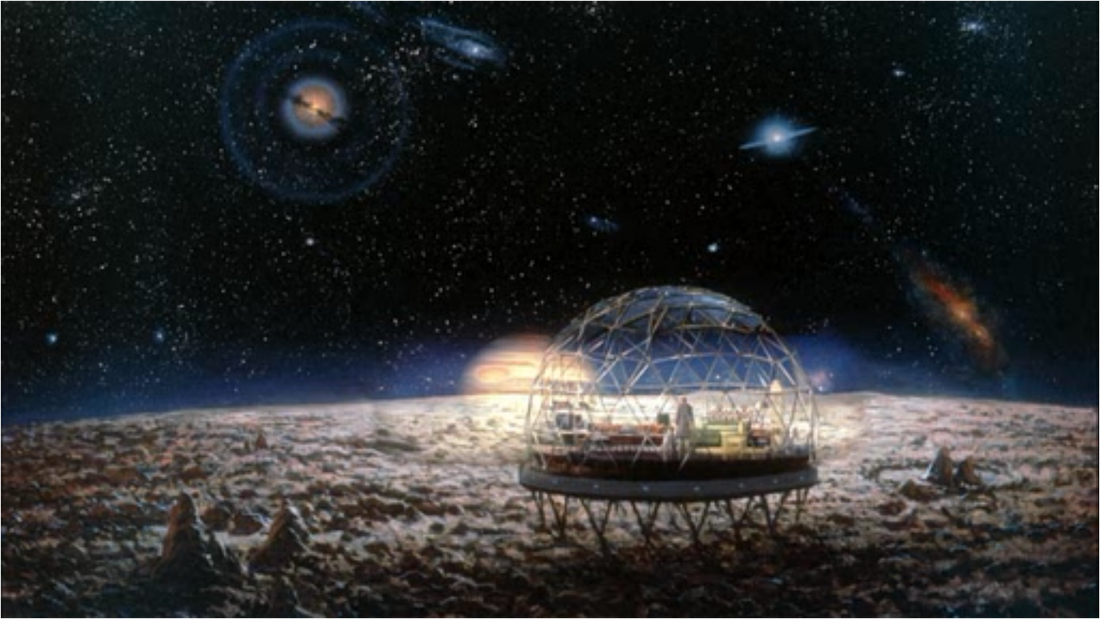
It has been a while since I read Kurt Vonnegut’s Slaughterhouse Five, or even seen the movie. So, it’s likely I have forgotten, or misremembered, some of the details. Slaughterhouse Five is the story of a man who’s become unstuck in time. This rather ordinary fellow, Billy Pilgrim, slides along his life, randomly reliving past experiences, and future events as well. At some point in the non-chronological plot aliens (the Tralfamadorians) pluck Pilgrim from the Earth, to display him in a zoo on their distant planet. Whether Pilgrim’s lack of a temporal tether is caused by the aliens is one of the details which has slipped my mind. But that may not matter. Vonnegut’s books always struck me as directed waking dreams, ushering the reader down the road to some nebulous destination you don’t realize you’ve reached until you’ve been there a while.
I’m not any kind of Vonnegut scholar, so I won’t attempt to analyze the book. Especially when his books bleed characters, settings, and events into each other so freely. It gets to be confusing. At least, I get confused. Maybe that’s the intention.
What captivates me are the Tralfamadorians, the aliens who set Pilgrim up in a see-through geodesic dome in a zoo back on Tralfamadore. The Tralfamadorians are described as “...upright toilet plungers with a hand atop, in which is set a single green eye.” Strange enough, to us, but what really sets them apart is the Tralfamadorian ability to see time as simply another dimension, like the three we humans are comfortable with.
Since they can look back and forward in time, as we might look back and forward along a stretch of road, the Tralfamidorians are very casual and fatalistic about life. They see where their individual lives are leading, and know all about their own individual deaths. Being in the same boat, Pilgrim eventually adopts this attitude as well. It is implied he can do nothing else.
There’s a lot going on in Slaughterhouse Five, but I fixated on the mechanics of how seeing in four dimensions might work. That’s a tall order, and I’m not sure I can fill it. Since it’s akin to asking a blind man to describe a rainbow.
What caused me some confusion to start off was the illusion that we, humans, can see the past, but not the future. The truth is, we can “see” neither. What we think of as perceiving the past is actually accessing the neural connections in our brains, which do a passable job of recording the past. Passable, but not infallible. Beyond the inherent limitations of the biochemical/electrical nature of this medium, we are prone to recording errors, conscious and unconscious selective editing, and corruption of the record. We actually experience an eternal present, in which we can retrieve a remembered past of questionable accuracy, or speculate on the probability of future events.
No wonder the Tralfamadorians pitied humans, in our self-inflated opinion of our temporal awareness. We must seem like those goldfish with a three-second memory span (or five months, depending on which study you credit). No wonder the aliens grabbed Pilgrim and stuck him in a zoo, like he was some mutant, genius goldfish.
There’s a sub-sub-genre of science fiction which deals with time travel of the human consciousness, to different bodies in other times. The Quantum Leap TV show fits under that heading. Does Slaughterhouse Five? Pilgrim is hopping back and forth to his own body in different points in his life. Arguably, those are different bodies, in that those brains don’t yet contain memories later Pilgrims will have laid down. How is time tripping Pilgrim using those brains to think with? Wisely, Vonnegut doesn’t explain this. Or, at least I don’t recall him doing so. Perhaps I’ve forgotten.
Somehow, Pilgrim manages this parlor trick. It would be a much duller book if he didn’t. He, and the Tralfamadorians, retain the knowledge of later events while inhabiting past bodies. Ironically, that makes him, and the aliens, much duller characters. They already know what’s going to happen, and are, literally, just going through the motions. Marking time until it’s time to exit, stage left.
Mental time travel would be tough for us humans. Say your consciousness does relocate to an earlier you. The thinking equipment you’re stuck with is lacking the software updates later you depends on. Bereft of future memories, you’ll likely do the same thing as before. Which safeguards causality if nothing else.
Maybe it’s just my limited, human perspective which leads me to view this as a tragedy. I’m just an oversized goldfish, living in an eternal present, ignorant of what will happen. I am at war with causality, because I labor under the illusion that I can change the future by my actions. The Tralfamidorans know that is futile. They see the immutable future laid out in front of us all.
Pilgrim, in Slaughterhouse Five, somehow retained his memories from his future self, with help from the Tralfamidorians most likely. Of course, he chose not to monkey with events, letting his life play out as remembered. Conversely, Sam Beckett, in Quantum Leap, did nothing but try to change the past (and consequently the future), in a bumbling, ill-informed way every episode. Sam was able to accomplish this in the nick of time each week, via some discreet divine intervention. Or so it is implied.
Maybe that is the real difference between Pilgrim and the rest of us. He moves back and forth through his life, and he knows it. Do we do the same, without realizing the feat? Perhaps we do. If time is simply another dimension, when we slide to previous or future selves we are limited to the memories in our heads at those times. As a result, if we had it to do all over again, that’s precisely what we do.
There’s probably a seed for a science fiction story there. Although it hasn’t coalesced in my mind yet. Vonnegut is a mighty tough act to follow. But I might be able to tackle something the caliber of Quantum Leap.
If you like At War With Causality, check out my novels at Novus Mundi Publishing, or just order them directly from Amazon:
A Grand Imperial Heir (sequel to A Grand Imperial War)
And visit my website, https://raytabler.com/, for Science Fiction You Can Enjoy!
I wonder if Vonnegut makes a statement about fate - that events past and present are “foretold” so we humans have no free will - that’s what it sounds like, though Vonnegut was a great satirist so it could be tongue-in-cheek. It’s something to think about though: the validity of past vs future events - one is sifted through faulty memory and the other hasn’t yet happened. Good article!