
Samizdat Goes Respectable
Essay. 700 words, 4-minute read.

Samizdat Goes Respectable
By Ray Tabler
Samizdat is a single coin from the linguistic inheritance bequeathed to us from the cold war. Other questionable treasures of that hoard include words and phrases like iron curtain, gulag, overkill, and mutually assured destruction. It was a crazy time. In fact, we only realize how crazy looking back on it from the (arguably) relative safety of the 21st century. From before I was born until some indeterminate date after the Soviet Union gave up the ghost in the chaos of the abortive coup to topple Gorbachev, strangle perestroika, and bring back the bad old days, the world was never more than 15 minutes from Armageddon. You got used to it. Duck & cover drills in elementary school. Proxy wars. Periodic nuclear saber rattling, and a few legitimate close calls. Enigmatic civil defense placards on the wall near basement entrances of substantial public buildings. It was just background muzak of the later 20th century.
The Soviets weren’t the first repressive regime to take a swing at policing what people think. And, they won’t be the last. They sure gave it the old college try, though. A major headache for the politburo was that people can get mighty creative when you go to monitor and control every aspect of their lives. Which brings us back to samizdat.
Samizdat is the Russian word for self-publishing. Forbidden literature. Banned books. Banned anything. The authorities reasoned that if people don’t get wrong-think in their head to begin with, it doesn’t have to be brainwashed out of there later on. Turns out wrong-think takes root and sprouts all on its own, no matter how brutally repressive the regime is.
The KGB used to keep samples of output from every single typewriter in the Soviet Union. If samizdat was seized, they’d have a ‘fingerprint” on file to trace down the source. And, forbidden works were typed up 4 or 8 copies at a time, using carbon paper. Page by page. Photocopier technology created a major headache for the secret police. Every single photocopied page in the Soviet Union page was supposed to be logged and accounted for. But it wasn’t really that hard to bribe the clerks who oversaw this system.
Still, why would people take the risk simply to read texts the authorities claim are dangerous? The lure has to be more than just the thrill of tasting forbidden fruit. I think it must’ve been that the public realized their government was lying to them. And, the thirst for truth is a powerful driving force.
Is it a coincidence that self-publishing is a direct translation of samizdat? Of course, self-publishing is completely legal, and won’t get you sent to the gulag. (At the moment.) But both activities are a grass-roots reactions to a centralized control of what people can read and say. This is not an indictment of any political point of view. The Soviets were of the left. Big publishing houses got that way due largely to market forces. Which are, nominally, a right-wing constituency. The wolf who hungers for power doesn’t really care what ideological sheep’s clothing it wears.
What’s important is that people found ways to make an end run around imposed constraints. Because that’s what we do. And it was all splendidly spontaneous, de-centralized, and grass-roots. As it had to be. By the time the Soviets, or the big publishers, realized what was happening, it was too late.
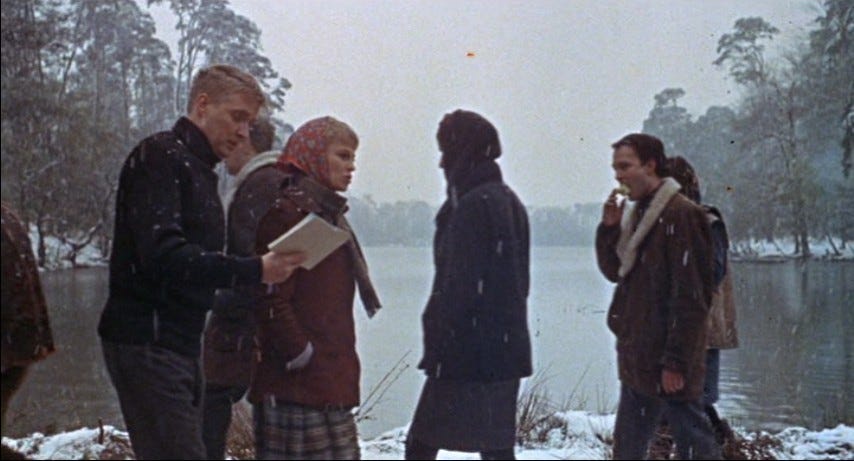
The image accompanying this post is from the final scene of the 1966 movie adaptation of Ray Bradbury’s Fahrenheit 451. The book, and the film, are about a future society which banned the written word. Ostensibly because reading and writing causes disruption. Well, they are right about that. The end of Fahrenheit 451 shows the people memorizing the stories the government no longer allows to be written down. I find it a very comforting notion. Because, the truth always finds a way.
END.
Check out my novels at Novus Mundi Publishing, or just order them directly from Amazon:
A Grand Imperial Heir (sequel to A Grand Imperial War)
And visit my website, https://raytabler.com/, for Science Fiction You Can Enjoy!
I was a child in the 1960's and an Air Force officer in the mid 1980's. I was all too aware of the danger of a nuclear exchange. We had lots of conversations about this topic when I was in the military. We understood better than many the reality of a nuclear exchange and it scared the hell out of us.
Going through Air Force officers school was an interesting experience for what we were taught about the Soviet government and the military. My wife had been a Russian history major in college so we had an entire book case on Russian history and all things Soviet. Her knowledge and our conversations were certainly more nuanced than what I received from our government.
Reading the news over the last 40 years since I Joined the Air Force, especially when it comes to Russia, has been a series of history repeating itself. We are very poor students of history and everything that is happening today has happened before, just in a slightly different way. It's just how Russia has always been.
The power of self publishing can be astounding. I hope we don't lose that in all the noise of the disinformation and misinformation flooding the Internet. I hope as a country we continue to read and think critically, though each passing year I'm afraid that ability is getting lost. I find attacks on the traditional news media especially troubling.
Thanks for sharing this bit of history, especially for people who haven't lived through it.